

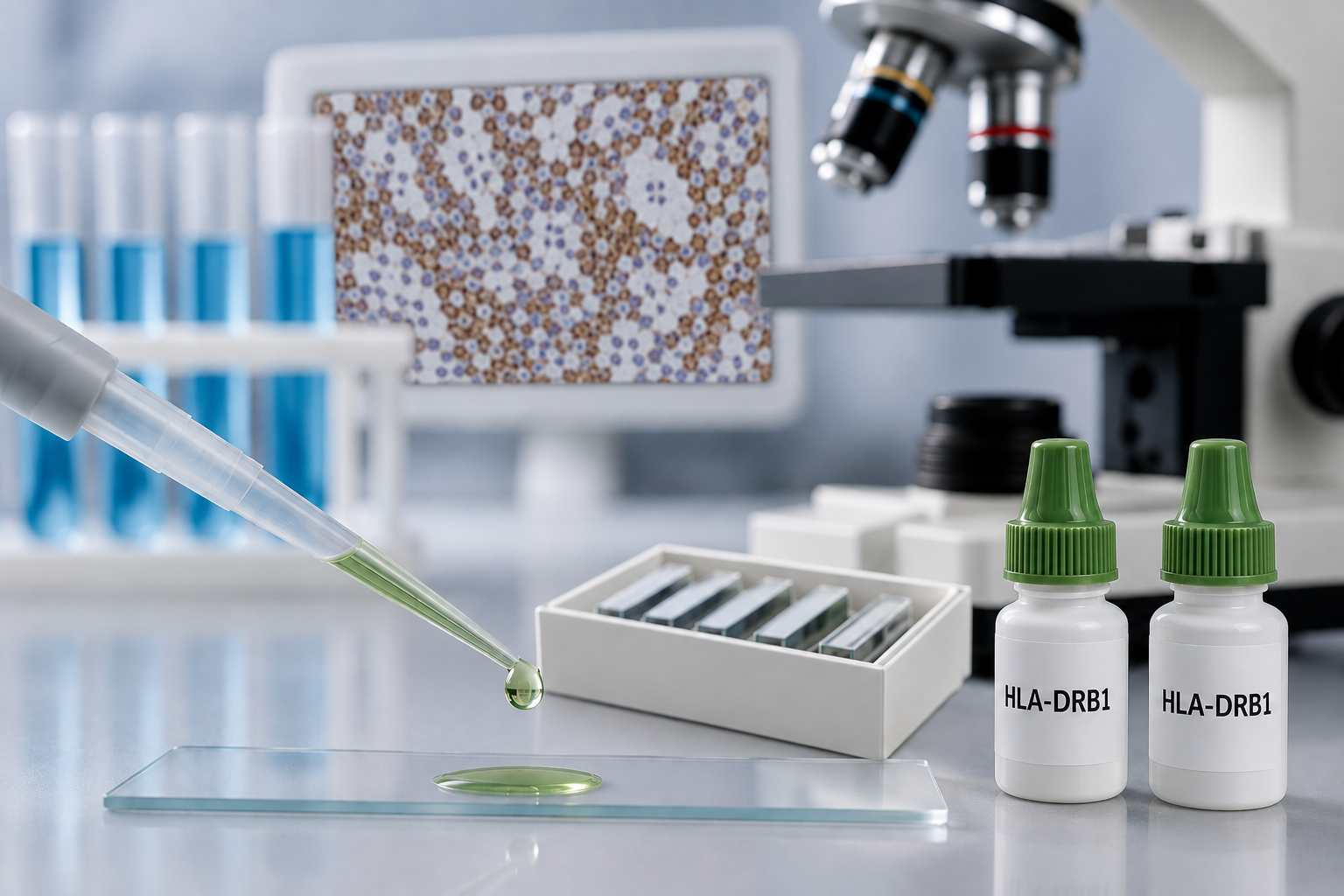
What is HLA-DR?
HLA-DRB1 is part of a group of proteins called HLA class II molecules. In diagnostic labs, it's often called MHC class II antigen DRB1. It's made of two parts that sit together on the cell surface - an alpha chain and a beta chain. Together, these two pieces work like a display stand. Their job is to hold up small pieces of protein so the immune system can check them and decide if action is needed.
Because of this job, HLA-DR shows up mainly on cells whose whole purpose is to show things to the immune system. That includes B lymphocytes, monocytes, and dendritic cells. It can also appear on T-lymphocytes and granulocytes once they become active.
Why it matters in diagnosis
In normal tissue, HLA-DR marks out where the immune system is on watch. But its real value comes out when something is wrong. It shows up in different types of acute lymphoblastic leukemia and acute myeloid leukemia, which makes it genuinely useful when classifying these blood cancers.
It's not limited to blood cancers either. HLA-DR has also been found in some solid tumors, including cancers of the colon and breast. So even outside hematology, it can add useful context to a case.
On tonsil tissue, which is commonly used as a control, HLA-DR gives a clear and easy-to-read staining pattern. That makes it simple to check whether your staining protocol is working the way it should.
Where it fits in your workflow
If you work on panels for lymphoma, leukemia, or even certain solid tumors where immune activity plays a role, HLA-DR is worth having on hand. It won't replace your core markers, but it adds a view you can't easily get elsewhere - a direct look at how the tissue's immune presentation system is behaving.
At PathnSitu, our HLA-DRB1 antibody (Clone EP191) is available for both Research Use Only (RUO) and In Vitro Diagnostic (IVD) applications. It has been validated on appropriate control tissues, including tonsil, and is designed to deliver consistent staining performance when used according to the validated Instructions for Use (IFU), supporting reliable immunohistochemistry workflows in both research and diagnostic laboratories.