

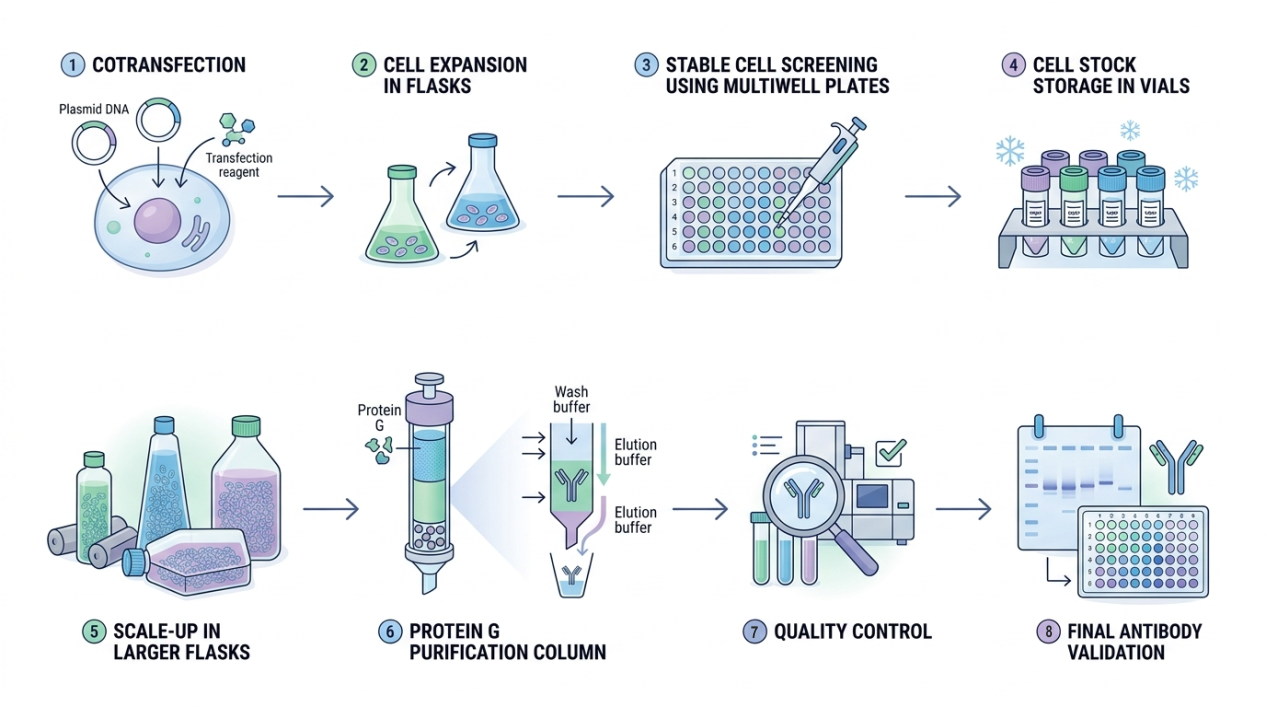
 Antibodies are essential tools in biomedical research, diagnostics, and therapeutic applications due to their remarkable specificity and affinity for target antigens. They are broadly classified into three types: polyclonal, monoclonal, and recombinant antibodies. Traditional polyclonal and monoclonal antibodies are produced by immunizing animals with an antigen, which triggers B-cell activation and genetic recombination. Polyclonal antibodies (pAbs) are generated by multiple B-cell clones and can recognize several epitopes on the same antigen, whereas monoclonal antibodies (mAbs) are derived from a single B-cell clone and bind to a single, specific epitope.
Recombinant antibodies (rAbs), in contrast, are produced through genetic engineering techniques. They are monoclonal in nature, offering high specificity and reproducibility, along with several advantages over conventional antibodies. These advantages include improved batch-to-batch consistency, a reliable and continuous supply, and the ability to be modified through antibody engineering. As a result, recombinant antibodies are increasingly utilized in research, diagnostic assays, and therapeutic development.
The production of recombinant antibodies involves in vitro manipulation of antibody genes. Specifically, the genes encoding the heavy and light chains are cloned into expression vectors, which are then introduced into suitable host cells for protein expression. Commonly used host systems include mammalian cell lines such as CHO and HEK293. Alternative approaches, such as phage display and lentiviral expression systems, are also widely employed. Although mammalian cells are the preferred choice for producing functional recombinant antibodies, other systems including bacterial, yeast, and insect cell lines can also be used depending on the application.
Key Advantages of rAbs: