

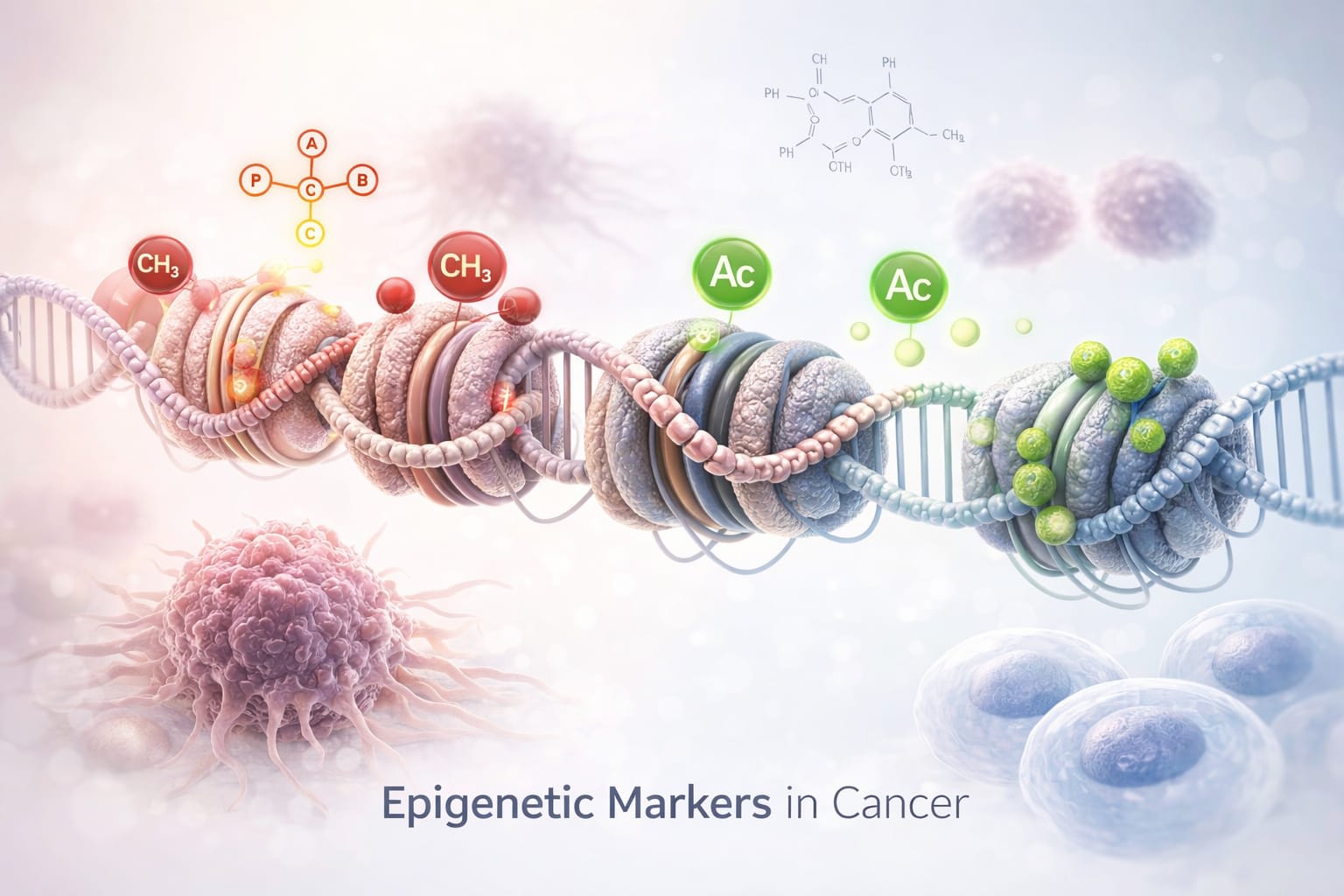
Cancer is not caused only by changes in DNA sequence. Changes in epigenetic markers also play a key role in how cancer develops and progresses. These markers control how genes are switched on or off without altering the DNA itself, making them important targets in modern cancer research.
Understanding Epigenetic Markers
Epigenetic markers are chemical tags that regulate gene activity. The most common types include DNA methylation, histone modifications, and non-coding RNAs such as microRNAs. In healthy cells, these markers help maintain normal gene expression. In cancer cells, this balance is disrupted, leading to abnormal cell growth.
Why Epigenetic Changes Matter in Cancer
In many cancers, tumor suppressor genes are turned off due to abnormal DNA methylation, while genes that promote cancer growth may become overactive. These epigenetic changes often occur early in cancer development, sometimes even before visible symptoms appear. Because of this, they are highly valuable for early detection and disease monitoring.
Epigenetic Markers as Cancer Biomarkers
Epigenetic markers are widely studied as cancer biomarkers because they can help in early diagnosis, cancer classification, and predicting treatment response. Some DNA methylation markers can even be detected through blood samples, supporting the development of non-invasive tests such as liquid biopsies. As research advances, these markers are expected to play a major role in personalized cancer care.
Epigenetic Marker Screening and Liquid Biopsy
Epigenetic marker screening has become an exciting advancement in cancer care as it allows doctors to identify changes linked to cancer without traditional tissue biopsies. This approach focuses on detecting abnormal patterns in DNA methylation and other epigenetic signals that tumors release into the bloodstream.
Liquid biopsy is at the heart of this screening method. It involves a simple blood draw that captures circulating cell-free DNA shed by cancer cells. By examining methylation patterns, clinicians can spot cancer-specific epigenetic signatures with high accuracy, making it especially useful for early detection before obvious symptoms appear, as well as for monitoring treatment response and detecting residual cancer cells.
Key Takeaway
Epigenetic markers help explain how cancer develops beyond genetic mutations. Their ability to reflect early and reversible changes makes them powerful tools for cancer diagnosis, prognosis, and future targeted therapies.